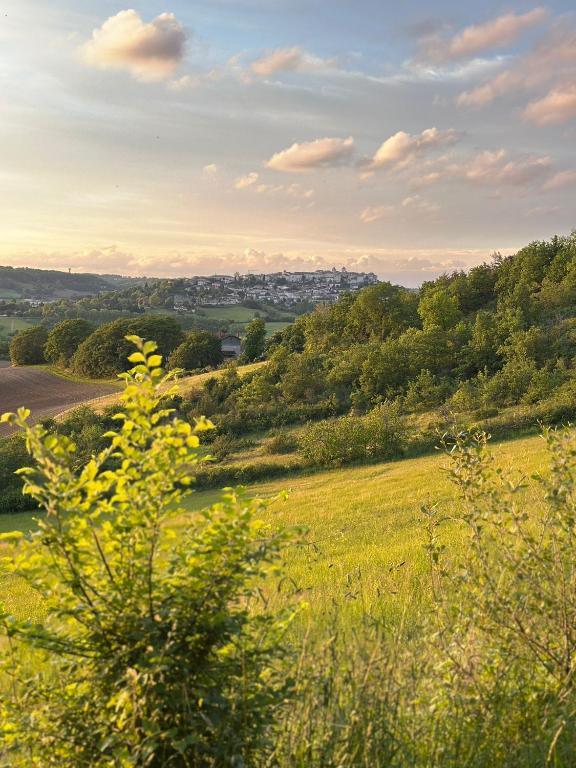
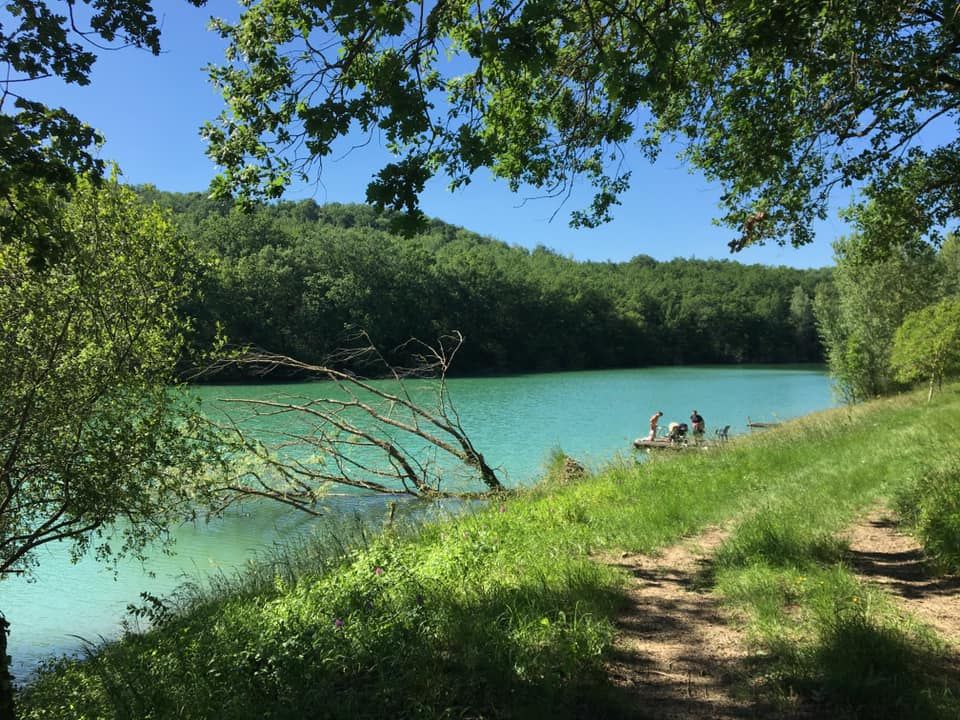
Spring
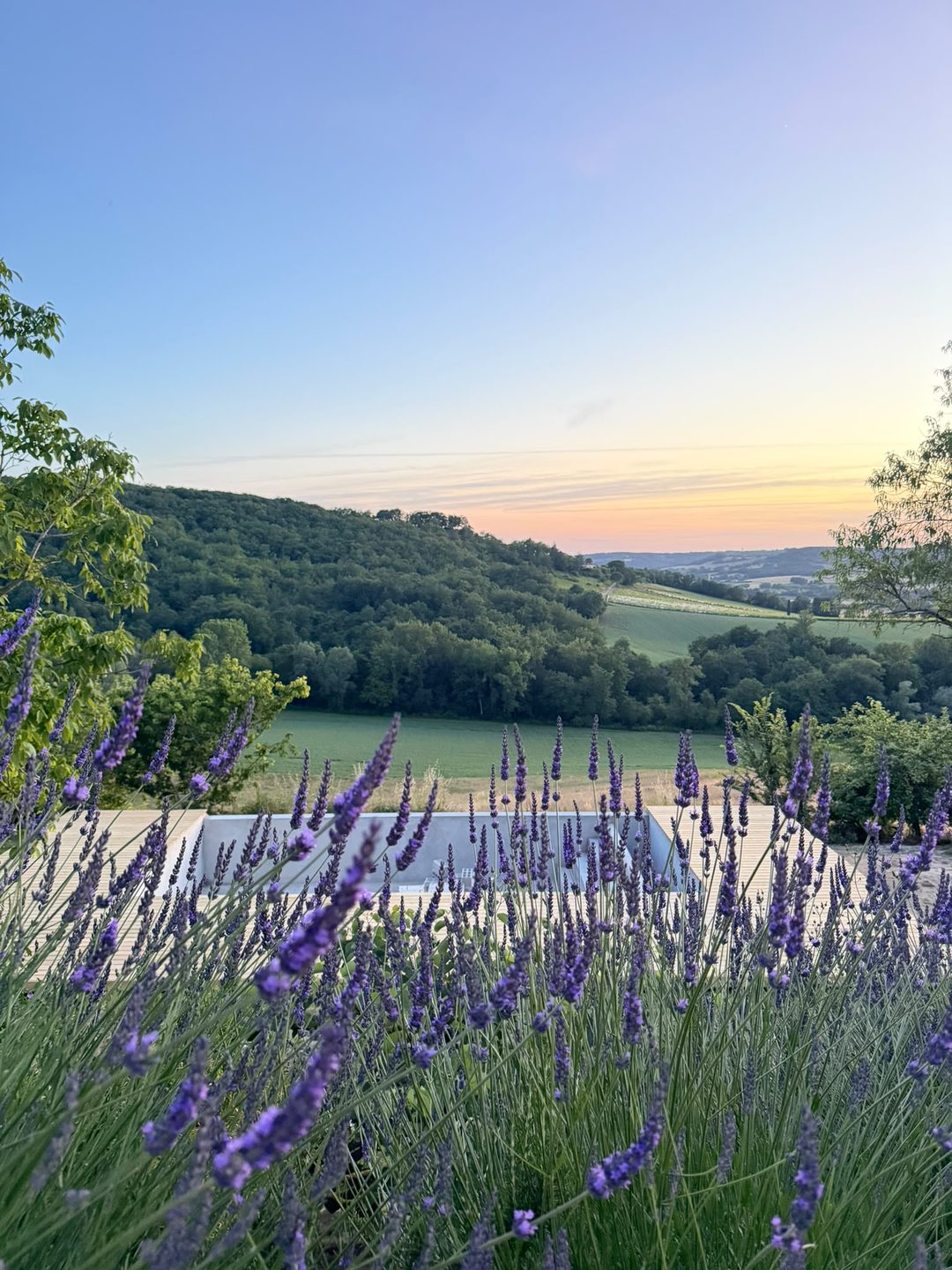
The hills turn green, the orchards blossom and the paths invite family walks through majestic, still-quiet countryside. The first markets, the first lunches outdoors.
Home · Lauzerte & Quercy Blanc
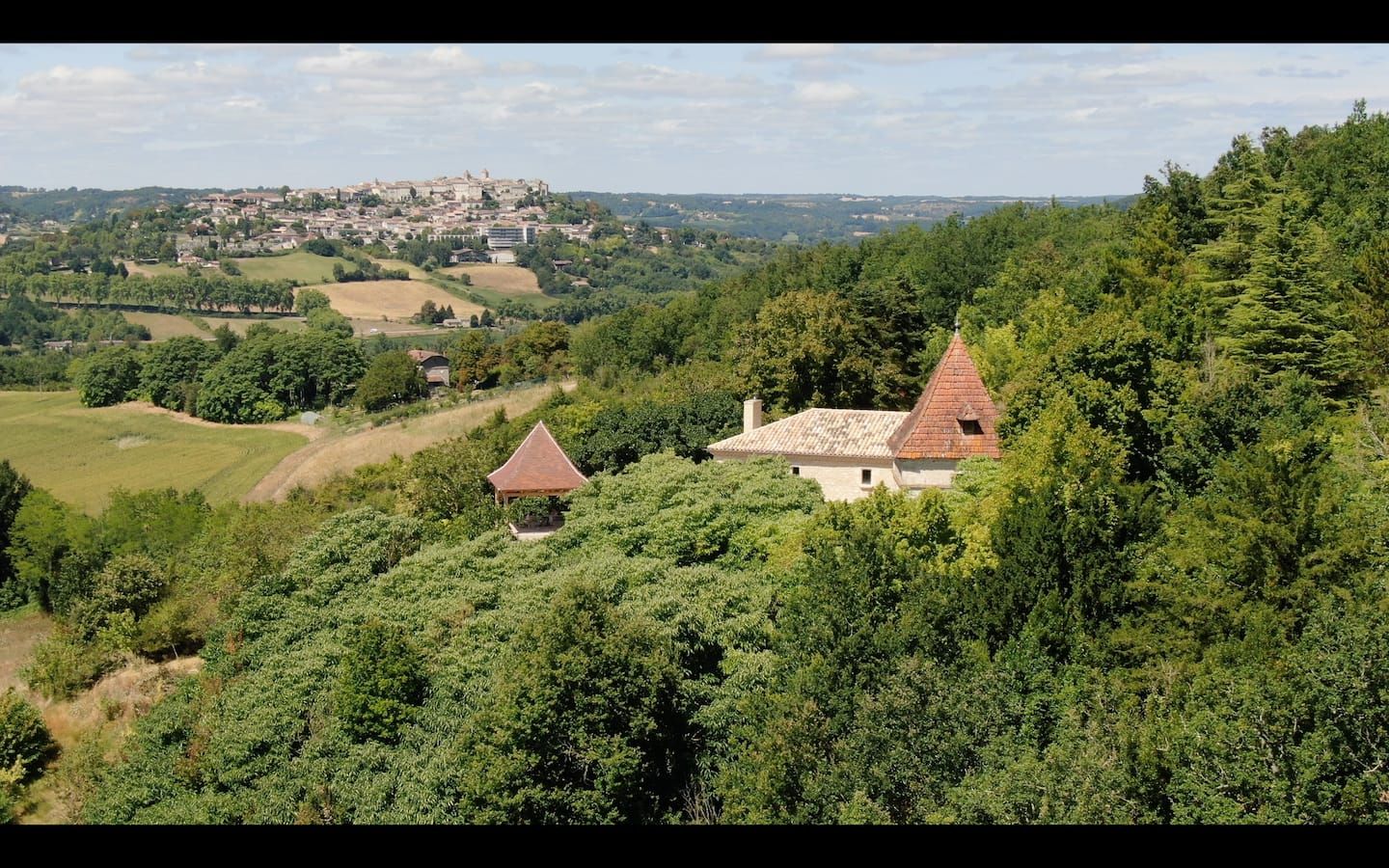
A hilltop bastide, Chasselas vineyards, the Way of St James, and all of south-west France within reach.
Lauzerte, 3 minutes away
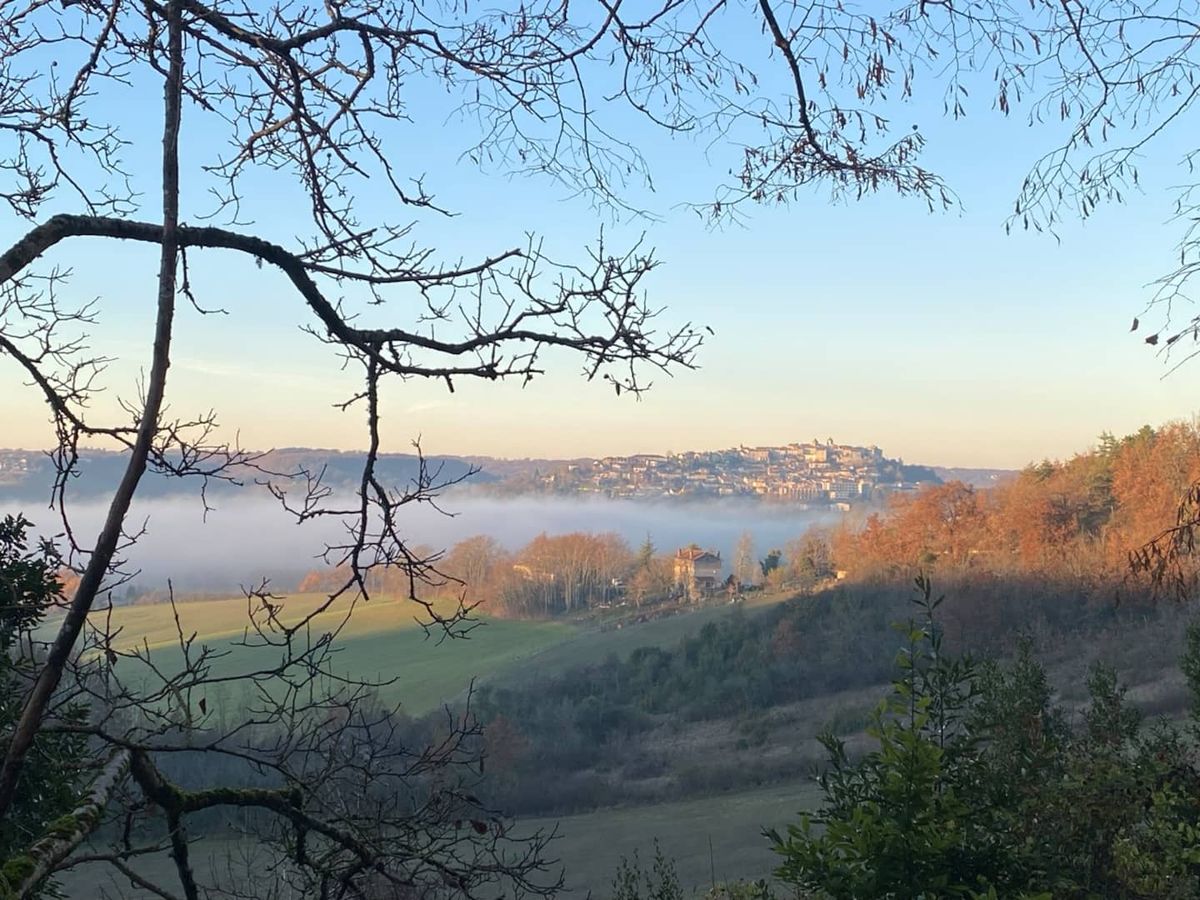
Rising on a limestone spur, Lauzerte overlooks the valleys of the Quercy Blanc. A fortified settlement was founded here in the late 12th century; in 1241 Raymond VII, Count of Toulouse, made it a bastide. The village has been listed among the Most Beautiful Villages of France since 1990.
A historic stop on the via Podiensis (GR 65) to Santiago de Compostela and once a prosperous market town, Lauzerte has kept its grey-stone and half-timbered houses, its sloping lanes and its 180° viewpoints.
01 / 09
Village restaurants, bistros nearby, Michelin-starred tables, then markets, producers and winemakers.
Under the arcades, on the main square.
Quercy cooking in the upper town.
An intimate spot in the bastide.
The village café, for a drink outside.
Below the Carmelite chapel, where Fleur rests.
Traditional cooking in the lower town.
Wood-fired pizzas, eat in or take away.
Crêpes and buckwheat galettes.
For a quick lunch.
The local caterer and its summer guinguette at Caumont: country dinner by the dovecote, pétanque and live music.
Village bistro, home cooking, terrace.
Generous home cooking with fresh seasonal produce.
The lock-keeper’s house by the canal, in the spirit of Christian Constant, with chef Christophe Marque.
Chef’s table in the Quercy, praised by Gault&Millau.
In the old wine store of a great Cahors château, among the vines; Sunday-lunch rotisserie.
At the end of the Valentré bridge, Julien Poisot’s table (formerly at Château de Mercuès): simple in form, serious in substance.
The old village school: the classroom is now the dining room, the playground a terrace. Inventive cooking.
Artist’s bistro where the Aveyron meets the Viaur; the chef cooks alone, seasonal produce.
Under the arcades of Place Nationale, a seasonal menu changed every fortnight. Mostly at lunchtime.
The golf-club restaurant on the banks of the Garonne, with a large shaded terrace.
In one of the Most Beautiful Villages of France, an address selected by Gault&Millau.
Contemporary brasserie by a Ducasse-trained chef, a passionate champion of local produce.
Delicatessen, wine bar and restaurant: open kitchen and cooking over coals.
On the village square: bistronomic at lunch, gastronomic in the evening.
A warm café-restaurant full of character, around forty covers, in the heart of Montcuq.
In a restored barn among the vines of a biodynamic Cahors estate.
Pascal Bardet’s table, between tradition and modernity.
Quercy flavours in a château above the Lot valley.
New star in 2026: a former wine farm, Marius Halter’s creative cooking and a fine organic wine list.
A stone house facing an 11th-century Cluniac priory; Benjamin Toursel’s creative cooking.
Two stars for Pierre Lambinon, beneath brick vaults near the Pont-Neuf.
Bread and pastries for breakfast.
Free-range organic Gascon black pigs: farm shop, charcuterie and hams, farm visits and tastings.
Macarons, a Lauzerte speciality.
Orchard fruit, melons, cheese, Quercy wines.
The small market in the upper town.
One of the liveliest in the Quercy Blanc; coffee at the Café Broc.
A small, carefully tended vineyard: Brulhois reds and rosés, the “black wine” of the south-west. Tours and tastings by appointment; pair it with Auvillar.
On the limestone plateau above Cahors, one of the emblematic Malbec estates; its restaurant rounds off the visit.
In the Lot valley, an organic estate renowned for its great Malbecs; tastings at the cellar door.
Opening hours vary with the season: call ahead, or ask us, we are happy to book for you.
02 / 09
The bastide of Lauzerte, the neighbouring villages, the great sites within an hour’s drive, museums and visits.
In the village
Small, intimate and arcaded, the square has a curiosity: ceramicist Jacques Buchholtz’s “raised corner”, which makes the paving look like a carpet being lifted.
The first bay and the portal survive from the 13th century. Inside: a gilded Baroque altarpiece and panelling painted by the father of the painter Ingres.
Below the old ramparts, the village’s finest panorama. The garden, laid out as a life-size game of snakes and ladders, tells the story of the Compostela pilgrims.
In the Auriac quarter, the former chapel of the Carmelite convent founded in the 14th century. Fleur de Darnal has rested here since 1739.
Wednesday morning on Place du Foirail, Saturday morning on Place des Cornières: orchard fruit, melons, cheese, Quercy wines.
Craft workshops, galleries and a heritage museum; guided tours and torch-lit night walks run by the tourist office.
Around Lauzerte
≈ 15 min
Montcuq-en-Quercy-Blanc curls around its 24-metre, 12th-century keep. Narrow lanes, a stop on the Way of St James and a Sunday-morning market, one of the liveliest in the Quercy Blanc. Stop at the Café Broc.
≈ 20 min
A 13th-century bastide on its spur, with a large arcaded square and a domed church visible from afar. On the nearby causse stand three windmills, including Brousse, which still grinds its owner’s wheat.
≈ 25 min
Around Sainte-Alauzie, two windmills keep watch over the ridges: Boisse, recorded as early as 1699, a listed monument still in working order and open a few days a year, and Ramps, close by.
≈ 25 min
Our favourite: a charming little village among hillsides and limestone plateaus planted with truffle oaks, with the Boisse windmill nearby.
≈ 20 min
Hilltop village above the Séoune valley, on the Quercy Blanc lanes.
≈ 2 km
A remarkable viewpoint over Lauzerte at the top of the climb on the Way of St James. A private late-17th-century estate named after the Carthusians of Cahors, with a dovecote on columns visible from the path. See on the map ↗
Nearby
A private property, not open to visitors; you glimpse it while walking the surrounding paths. See on the map ↗
1.5 km
An 11th-century Romanesque chapel in the Combe du Miel, on the Way of St James. Walk there ↗
≈ 20 min
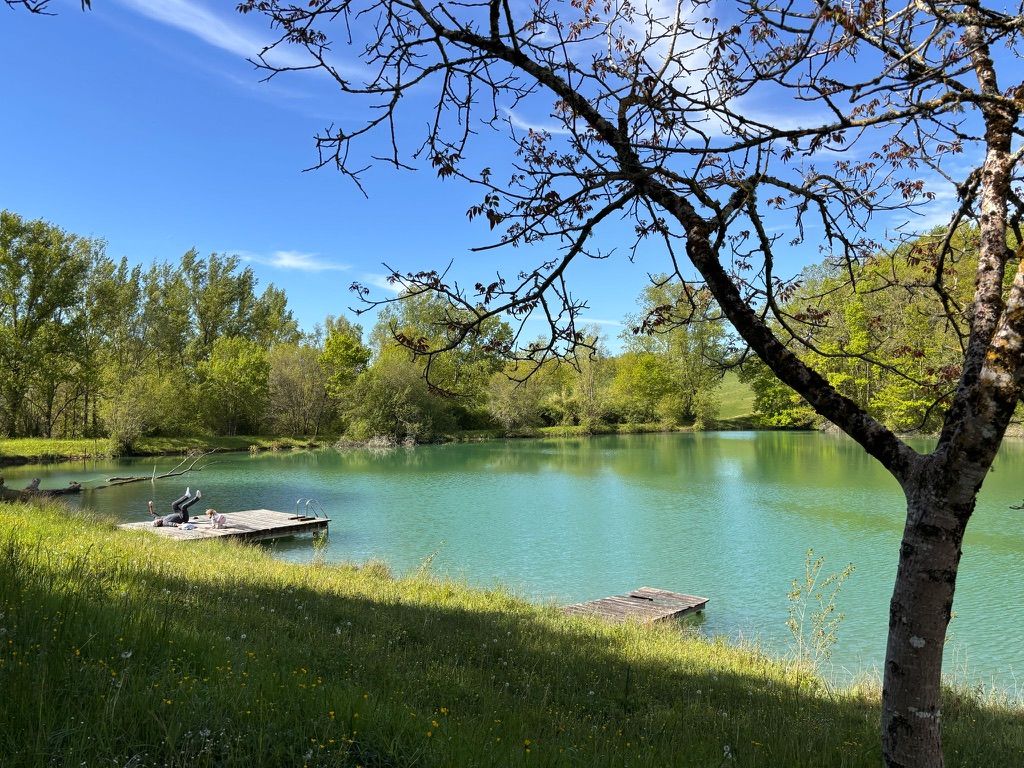
Lake and leisure park for swimming and children.
≈ 25 min
The Romanesque cloister of Saint-Pierre abbey and the Chasselas hillsides.
Saint-Sernin combe
A 2-hectare lake in the Saint-Sernin-du-Bosc combe, with a picnic area and a jetty. Access by permission only: just ask us. See on the map ↗
Map
Approximate driving times from the estate. Distance circles as the crow flies.
Day trips
≈ 25 min
The abbey of Saint-Pierre and its Romanesque cloister, one of the finest in the world; the canal bridge over the Garonne; Chasselas vineyards.
≈ 15 min
A Quercy Blanc village with its keep, Sunday market and GR 65 stop.
≈ 30 min
The pink-brick city, Place Nationale and the Ingres-Bourdelle museum. TGV station.
≈ 40 min
A Most Beautiful Village above the Garonne, with its round market hall and potters.
≈ 45 min
The Valentré bridge, Saint-Étienne cathedral and the Malbec vineyards.
≈ 1 h
Two castles perched on a cliff edge above the Aveyron.
≈ 1 h 15
The village clinging above the Lot; the towpath on foot or by bike.
≈ 1 h 15
The Capitole, seat of the capitouls who were Fleur de Darnal’s ancestors, Saint-Sernin basilica, Les Abattoirs, the Cité de l’espace and the Jacobins; for dinner, Pierre Lambinon’s two-Michelin-star Py-r.
≈ 50 min
Prunes, the canal bridge and the Garonne valley.
≈ 45 min
Every Tuesday from December to March, the most famous truffle market in the south-west, opened by a whistle.
≈ 1 h 05
Cliffs, the castles of Penne and Bruniquel, canoeing and a cycle path.
≈ 1 h 15
The medieval town and its Sunday market; further up, swimming where the Viaur meets the Aveyron.
≈ 1 h 20
The perched Gothic town, one of the Most Beautiful Villages of France.
≈ 1 h 30
Sainte-Cécile cathedral and the Toulouse-Lautrec museum, a UNESCO World Heritage site.
≈ 1 h 05
A little further into Gascony: the hilltop town, its cathedral and Gallo-Roman museum.
The story of the bastide, by the association that helped find Fleur de Darnal.
The Romanesque cloister and tympanum of Saint-Pierre abbey, a UNESCO World Heritage site on the Way of St James.
In the former bishop’s palace, works by Montauban’s two famous sons, the painter Ingres and the sculptor Bourdelle.
Toulouse’s fine-arts museum in a 14th-century convent: reopened late 2025 after six years of renovation, Gothic rooms reopened in October 2026.
A full-size Ariane 5 rocket, the Mir space station and a planetarium: a whole day for young and old.
The aviation museum beside Airbus’s runways: two Concordes, the Super Guppy and an Airbus A300B.
On the historic Aéropostale site, the epic of Mermoz, Saint-Exupéry and the airmail pilots.
One of France’s great natural history museums, with its gardens at Borderouge.
Opening hours vary with the season: call ahead, or ask us, we are happy to book for you.
03 / 09
Walking, cycling, golf and swimming, then the seasons and the summer festivals.
Activities
A hilly, wooded 9-hole course in the heart of the Quercy Blanc; friendly clubhouse.
Sandy beach, supervised swimming in summer, water games, fishing and picnics.
Over 20 ha in a protected natural site: lake with supervised beach, summer Aquapark, pedalos, fishing.
A 3.5-ha lake with a white-sand beach, in a 40-ha oak wood.
9 holes on the Garonne below the Auvillar hills; lunch at Le Tee Gourmet.
Opening hours vary with the season: call ahead, or ask us, we are happy to book for you.
All year round
The hills turn green, the orchards blossom and the paths invite family walks through majestic, still-quiet countryside. The first markets, the first lunches outdoors.
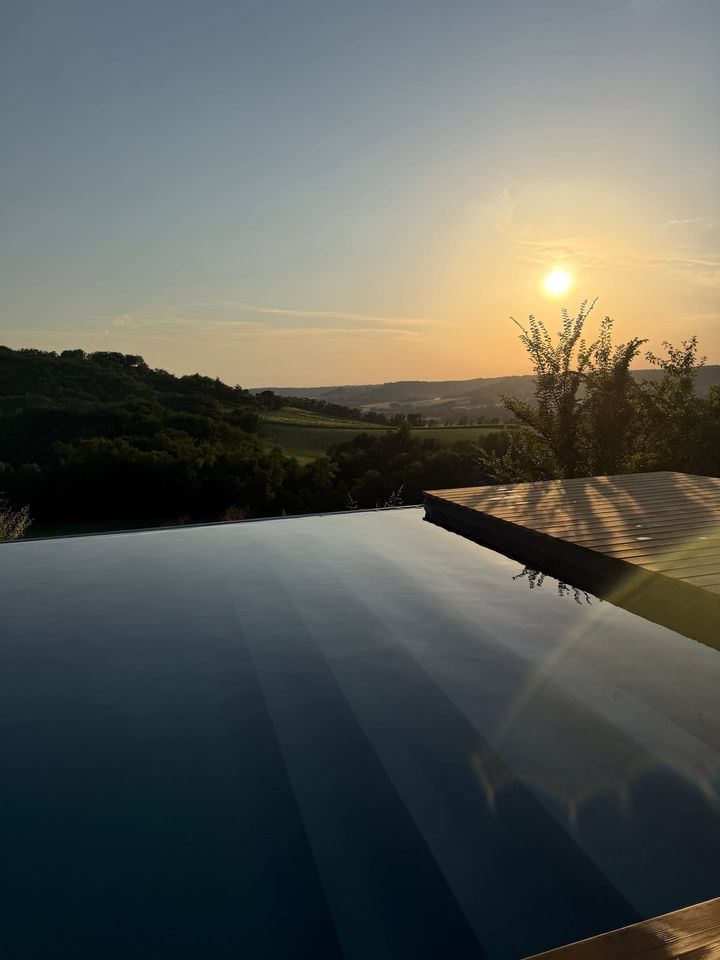
Lazy days by the pool, siestas in the shade of the oaks, swimming in the lakes, night markets and village fêtes, dinners facing the sunset.
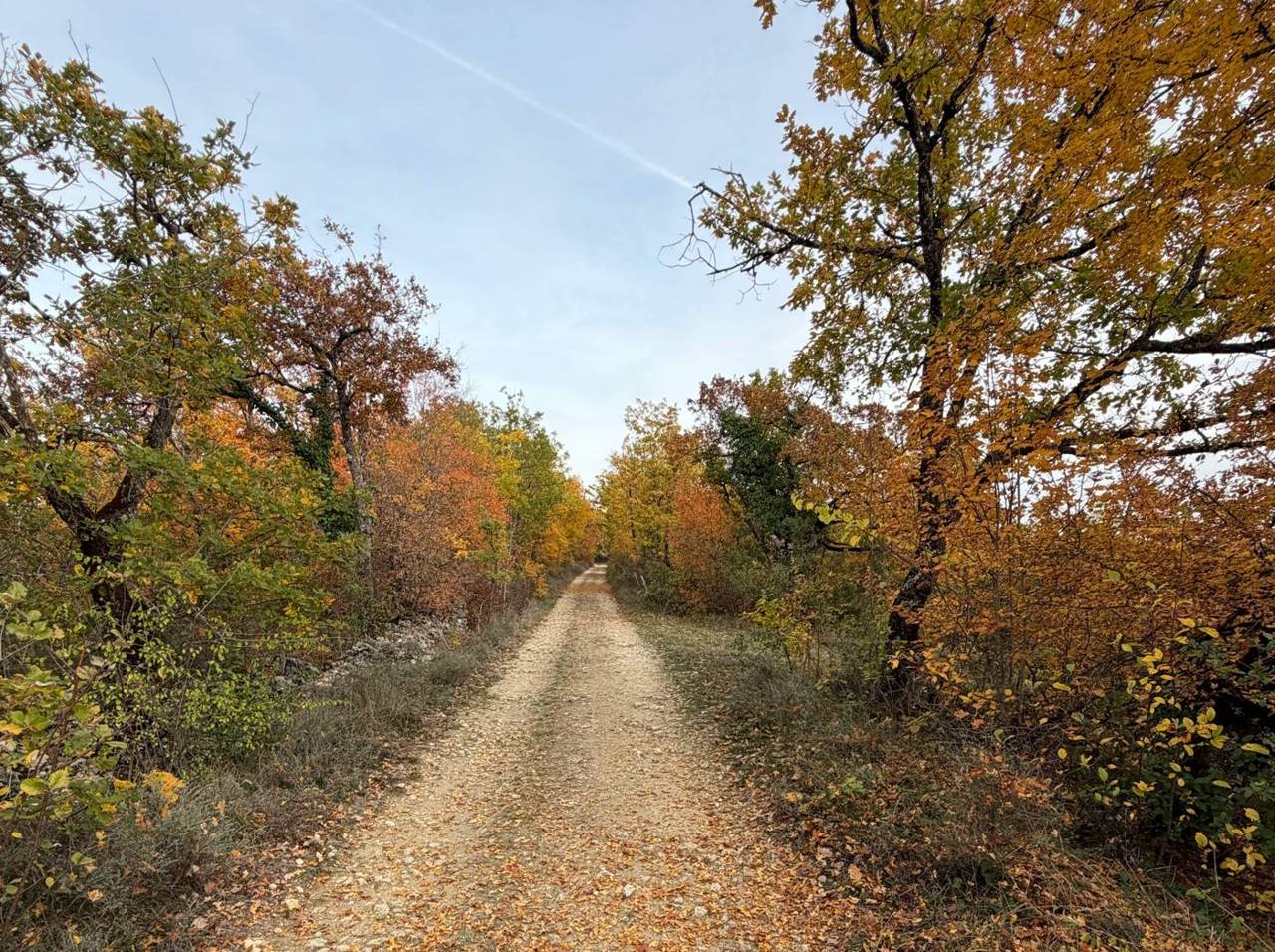
The oak forests turn to flame and the light grows golden: Chasselas harvest, ceps in the oak wood, the Cahors wine route. At night, the fire crackles in the stove.
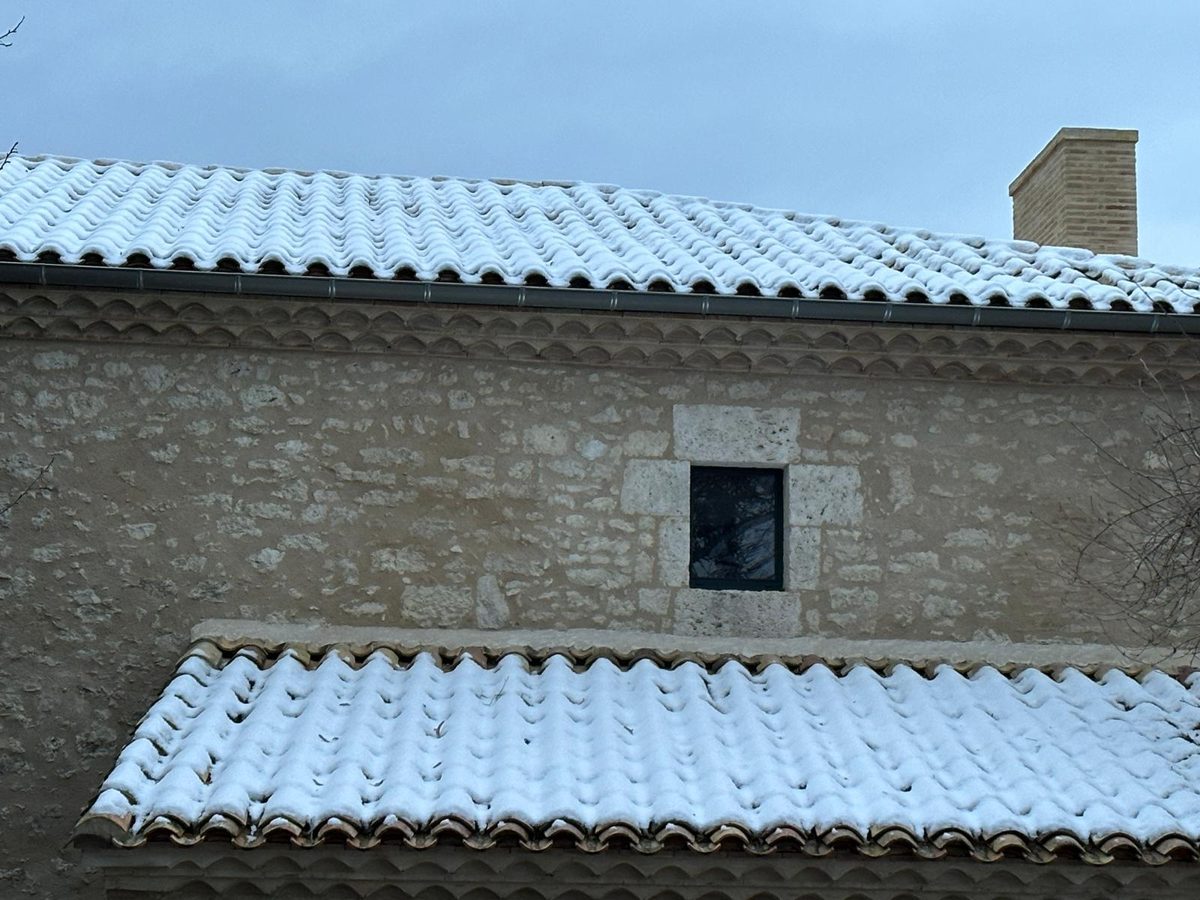
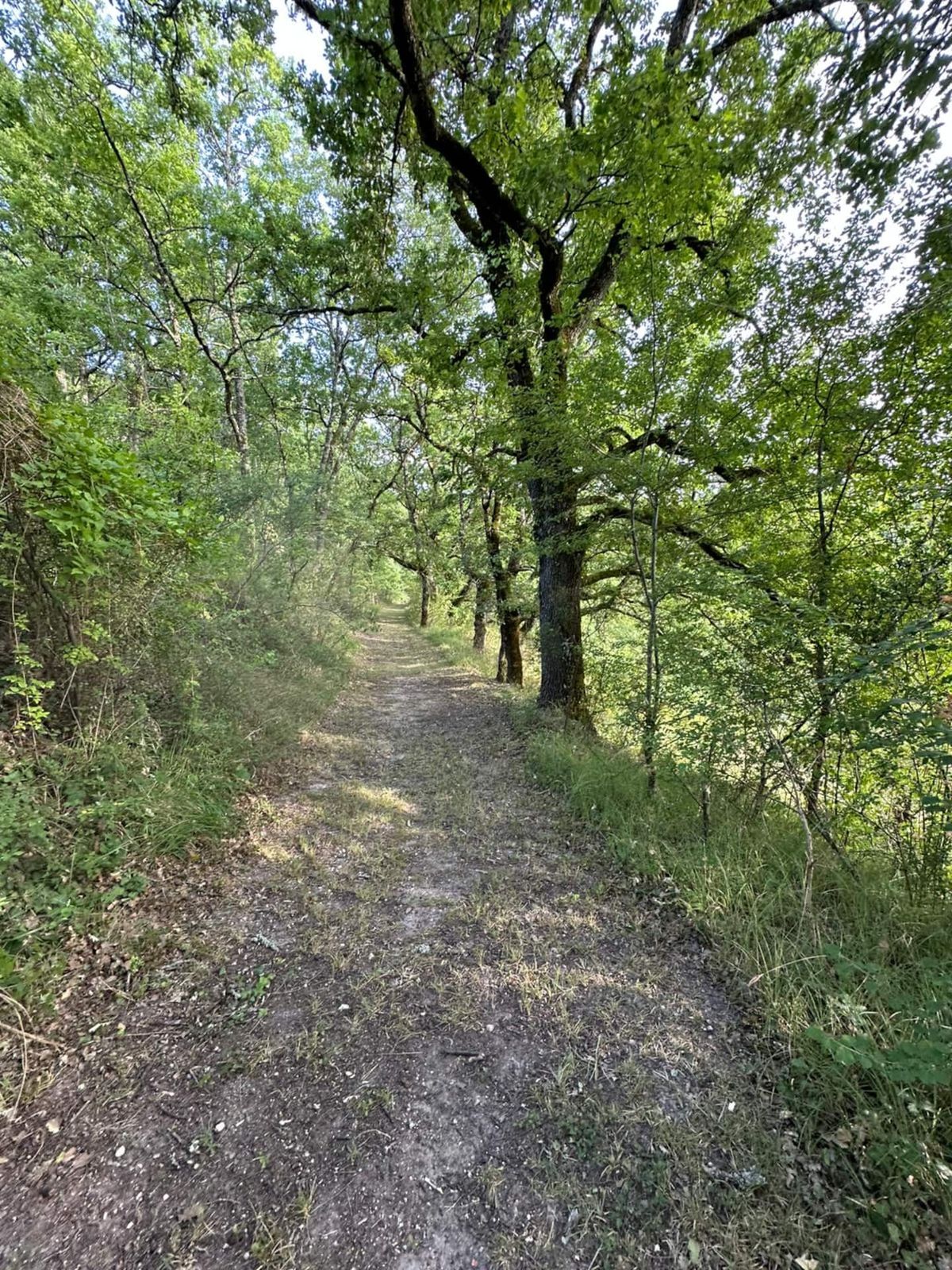
The comfort of the stove, the house dressed for Christmas, walks in the crisp clear cold, then long evenings by the fire.
Events
From Lauzerte’s night markets to jazz in Marciac, summer in the south-west is lived outdoors.
Moissac’s big popular weekend: concerts and festivities all over town.
World music on the banks of the Garonne, at the Prairie des Filtres, mid-June.
On 21 June, free concerts in the streets of Lauzerte, Montauban, Moissac…
The early-summer contemporary music festival, in the Jardin des Plantes.
The village fête, one weekend in July.
Dinner, dance and fireworks in the Faubourg d’Auriac, on 13 or 14 July.
Free concert at the Prairie des Filtres and fireworks launched from barges on the river (13 July in 2026).
On 14 July, launched from the Pont-Vieux over the Tarn, followed by a dance.
On the eve of 14 July, over the Lot beneath the Valentré bridge, followed by the firemen’s ball.
On 14 July at 10.30 pm, over 25 minutes of fireworks above the ramparts: a legendary show held since 1898.
Late July, singer-songwriters in Nino Ferrer’s village.
Blues on the banks of the Lot, in July.
The great jazz festival of south-west France, late July to early August.
Thursday evenings on the Place des Cornières: producers, shared tables and live music.
Open-air cinema on the Place du Château, on summer evenings.
June to September: concerts under the plane trees and projection mapping on the abbey church.
Early August, Quercy winegrowers on the town-hall square (alternating with another village).
In August, village fêtes, dinners under the plane trees, dances and village fireworks.
Late August: medieval market, knights, falconry and a fire show at nightfall.
Second weekend of September, the street-arts festival for young and old: circus, theatre, puppets.
Lauzerte becomes the capital of the short story for a September weekend.
Mid-September, celebrating Chasselas grapes and local fruit.
Late September, in tribute to Montauban jazz critic Hugues Panassié.
Early October, baroque music in the city’s historic venues.
Mid-November, a day devoted to trees, woodworkers and nature, in the village hall.
Usual periods, for guidance only: dates change every year. Ask the Lauzerte tourist office, or us, for the current programme.
04 / 09
The places we keep going back to ourselves, and happily recommend to our guests.
Wood-fired pizzas, eat in or take away.
Generous home cooking with fresh seasonal produce.
One of the liveliest in the Quercy Blanc; coffee at the Café Broc.
A warm café-restaurant full of character, around forty covers, in the heart of Montcuq.
Two stars for Pierre Lambinon, beneath brick vaults near the Pont-Neuf.
In a restored barn among the vines of a biodynamic Cahors estate.
A small, carefully tended vineyard: Brulhois reds and rosés, the “black wine” of the south-west. Tours and tastings by appointment; pair it with Auvillar.
Free-range organic Gascon black pigs: farm shop, charcuterie and hams, farm visits and tastings.
Chef’s table in the Quercy, praised by Gault&Millau.
Artist’s bistro where the Aveyron meets the Viaur; the chef cooks alone, seasonal produce.
The golf-club restaurant on the banks of the Garonne, with a large shaded terrace.
Opening hours vary with the season: call ahead, or ask us, we are happy to book for you.
05 / 09
Understanding the land: the Quercy Blanc, its ridges and hills, its white stone, dovecotes and mills.
The land
Between the Lot and the Garonne lies a land of serreslong limestone ridges divided by narrow valleys. The pale stone of its walls, dovecotes and farms gave it its name.
Between the Lot and the Garonne, the Quercy Blanc alternates hillsides, downy-oak woods, orchards and vineyards. It is the home of Chasselas de Moissac, a PDO table grape, Quercy melons, plums, walnuts and lavender, which blooms around the estate in July.
Cahors and Coteaux du Quercy wines, winter truffles and foie gras complete a generous table. For dinners at the estate, a caterer or private chef can come and cook for you.
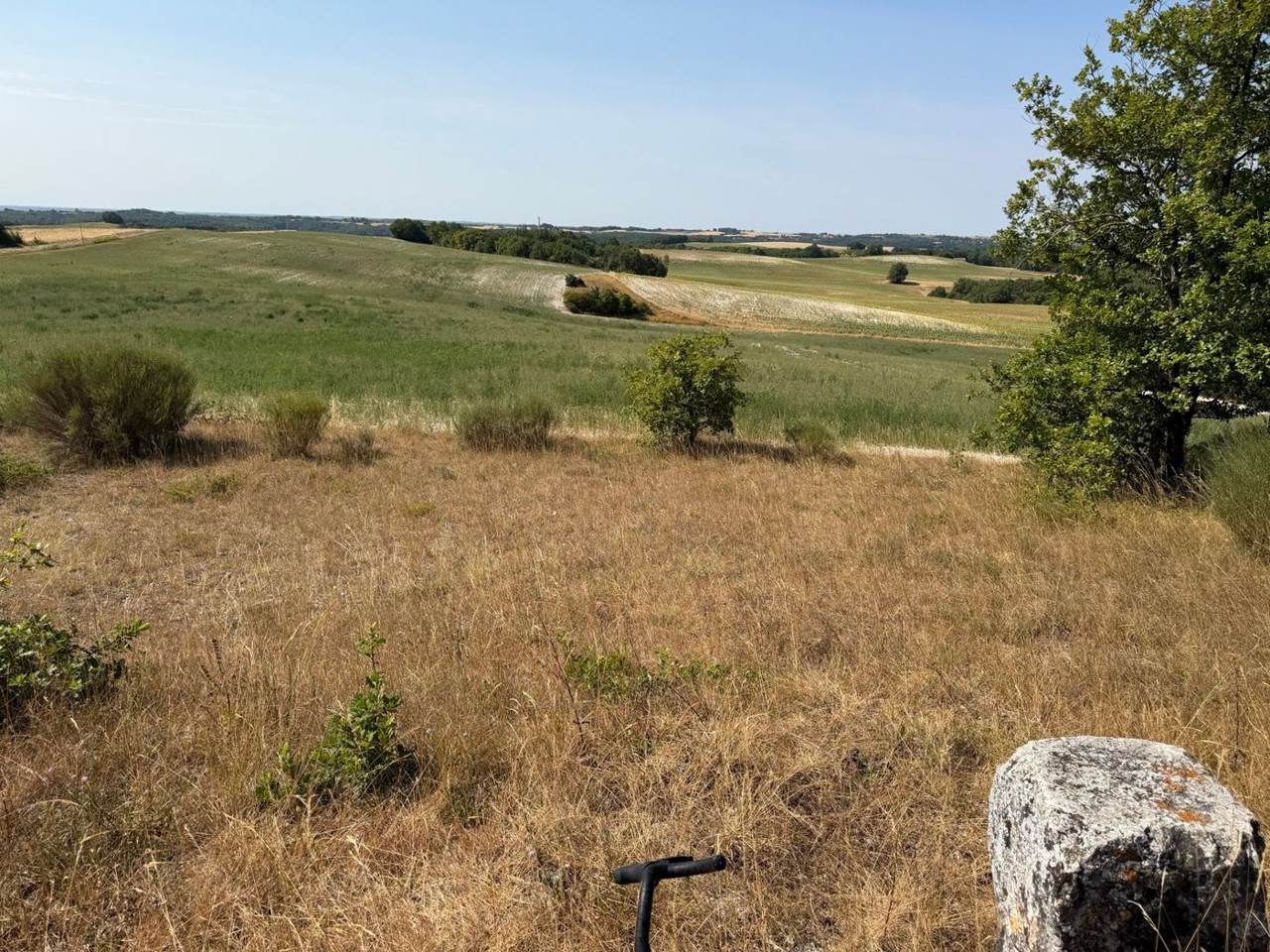
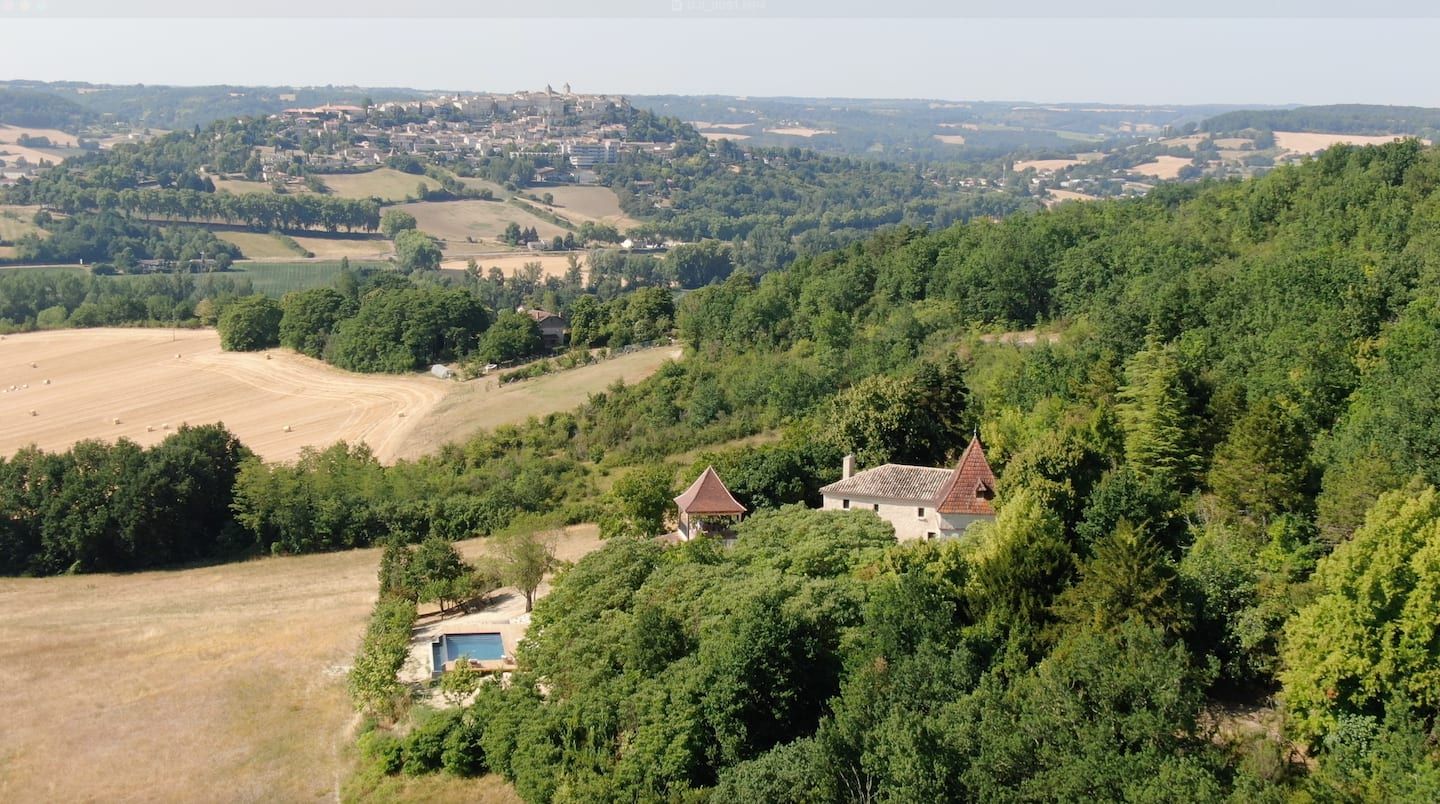
The Quercy Blanc, “white Quercy”, takes its name from its pale limestone soils, which light up the fields and dry-stone walls.
Reading the landscape
On the borders of the Lot and Tarn-et-Garonne, the Quercy Blanc takes its name from its chalky white limestone. Its “two-layer” geology, limestone plateaus with steep edges resting on soft marl, and its parallel valleys running towards the Tarn and the Garonne order the landscape with almost geometric rigour: from above, each valley draws an oak leaf. On the plateaus, rapeseed, sunflowers and vines, and the tuques, limestone knolls with short turf that recall the causse.
This landscape is also man-made. Until the 1960s, the Quercy lived from mixed farming: a little wheat and maize, vines for the household, tobacco, chasselas grapes and plums, a few animals in the barn, oxen for ploughing. Each farm produced almost everything it consumed, and mutual help set the rhythm of the year: threshing, grape harvests and husking the maize all ended around a long table. Stones cleared from the fields became dry-stone walls and huts, dove droppings from the dovecotes fertilised the soil, and the plots, which stayed small, drew this mosaic of crops, meadows and woods. With no heavy industry and no big city, the area has kept its human-scale villages, its empty roads and its unhurried pace: the serenity people come looking for today is its direct legacy.
The Quercy farmhouse: cubic volume, four-sided Roman-tile roof, dovecote set apart from the house.
After the sheet “Quercy Blanc et pays de Serres”, CAUE du Lot, Landscape units of Midi-Pyrénées (2011).
From the Latin serra, a saw: in cross-section the long limestone ridges divided by the Barguelonne, Lendou and Séoune valleys form a saw-tooth profile. The Quercy Blanc links the dry causses of the Lot with the fertile Garonne plains.
The land is known by the whiteness of its soil and walls: neatly squared limestone, low-pitched Roman-tile roofs, decorative eaves. In the gardens, box and Judas trees.
Each valley has its own style: porch dovecotes, corner dovecotes, dormer lofts, “mule-foot” or pillar dovecotes. Tayssou’s free-standing four-level tower is a fine example.
Watermills have lined the valley floors since the Middle Ages; windmills crowned the pechs, the wheat hills. The three listed mills of Castelnau-Montratier and the Boisse mill, open a few days a year, still stand.
For centuries the fields were cleared of stones by hand: the stones became low walls, cazelles (corbelled dry-stone huts) and cairns along the plots. On the plateaus they still trace the pattern of the old sheep pastures.
The Quercy Blanc is one big orchard: Chasselas de Moissac grapes (PDO), Quercy melons (PGI), plums, cherries and apples on the south-facing slopes. In summer, the markets of Lauzerte and Montcuq overflow with them.
06 / 09
Between the Lendou and the Barguelonne: the villages, valleys and ridges around the estate.
The country
Two parallel valleys, limestone “serres” between them and some forty villages: this is the estate’s home ground, from the hills of Montcuq and Castelnau-Montratier to Lauzerte and Bourg-de-Visa.
Exact outlines from IGN data (BD CARTO, contour lines, Admin Express) and Etalab administrative boundaries. Historic monuments from the French Ministry of Culture’s Mérimée database; official INSEE population figures. Hover over a commune, a monument or a heart to learn more.
07 / 09
The protected hill of Haut-Castel, its orchids, oak woods, hedgerows and starry nights.
A remarkable natural site
The estate lies at the heart of a type 1 ZNIEFF (natural area of ecological interest), “Butte de Haut-Castel et du Grès, Pech de Cachou et de Coupet”: 366 hectares recognised for their biodiversity between Lauzerte, Saint-Amans-de-Pellagal and Cazes-Mondenard.
The north slopes carry unmanaged downy-oak woods, with a stand of very old box; the edges and clearings shelter dry grasslands full of orchids (fragrant orchis is abundant), Italian asters and Cupid’s darts. The terebinth tree, recorded here by the botanist Lagrèze-Fossat a hundred and fifty years ago, still grows. Springs shelter the marbled newt; the marsh fritillary butterfly and the conehead mantis frequent the meadows.
Source: ZNIEFF inventory no. 730010551, INPN – French Natural History Museum. Please keep to the paths and do not pick plants.
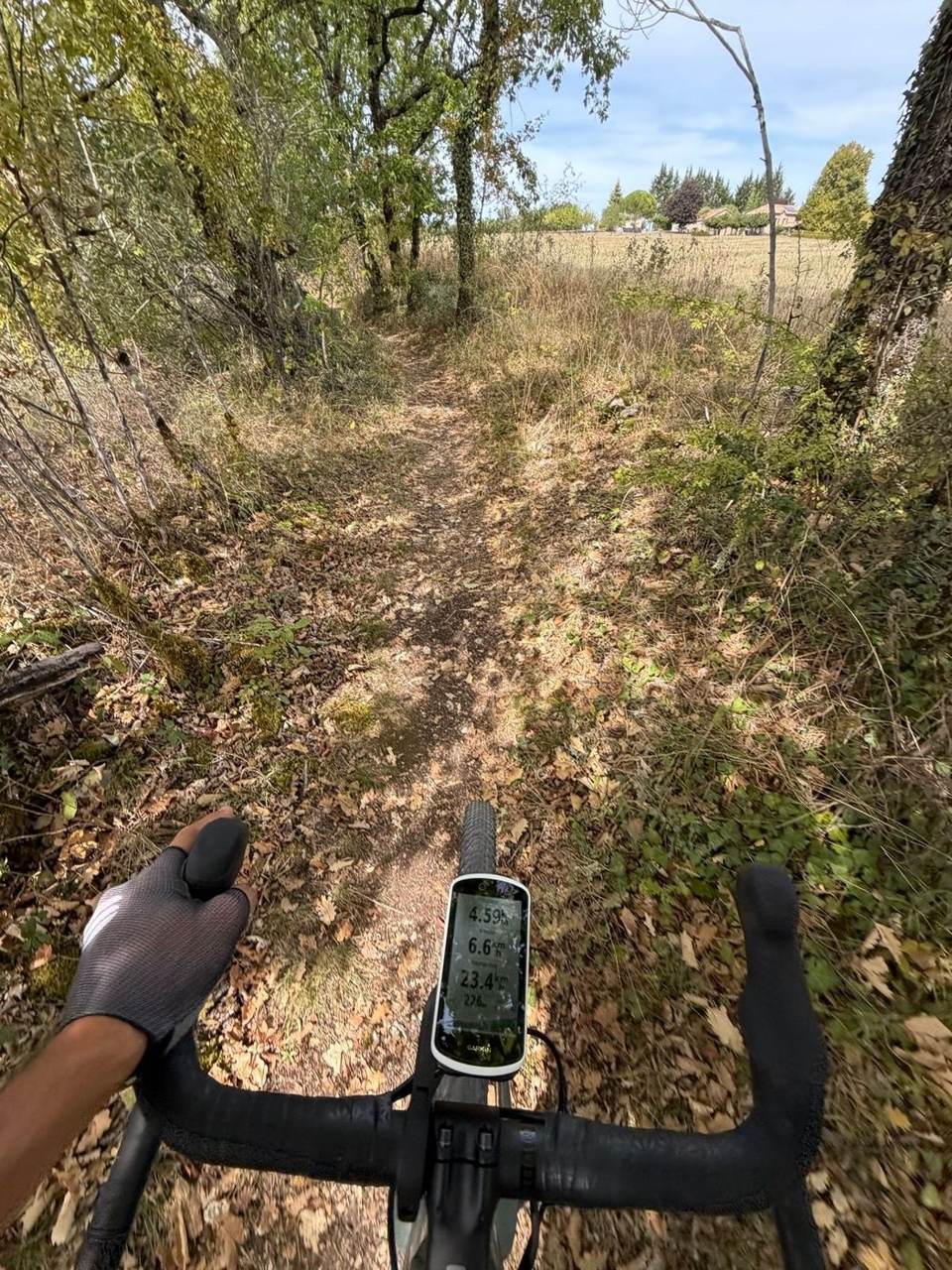
Through the seasons
From April to June, the dry grasslands of the hill fill with orchids; the fragrant orchid is abundant. They are protected: admire them, but don’t pick them.
Downy oaks, holm oaks and Montpellier maples hold the slopes; on the north side, a stand of very old box, rare in the region.
Hedges, low walls and woodland edges shelter discreet wildlife: farmland birds, roe deer at dawn, and even the dormouse, once master of Tayssou’s attics.
Few villages, little lighting: on a clear night the Milky Way is visible to the naked eye from the gazebo.
08 / 09
The rhythm of markets and seasons, away from the crowds, with the whole South-West within reach.
Quality of life
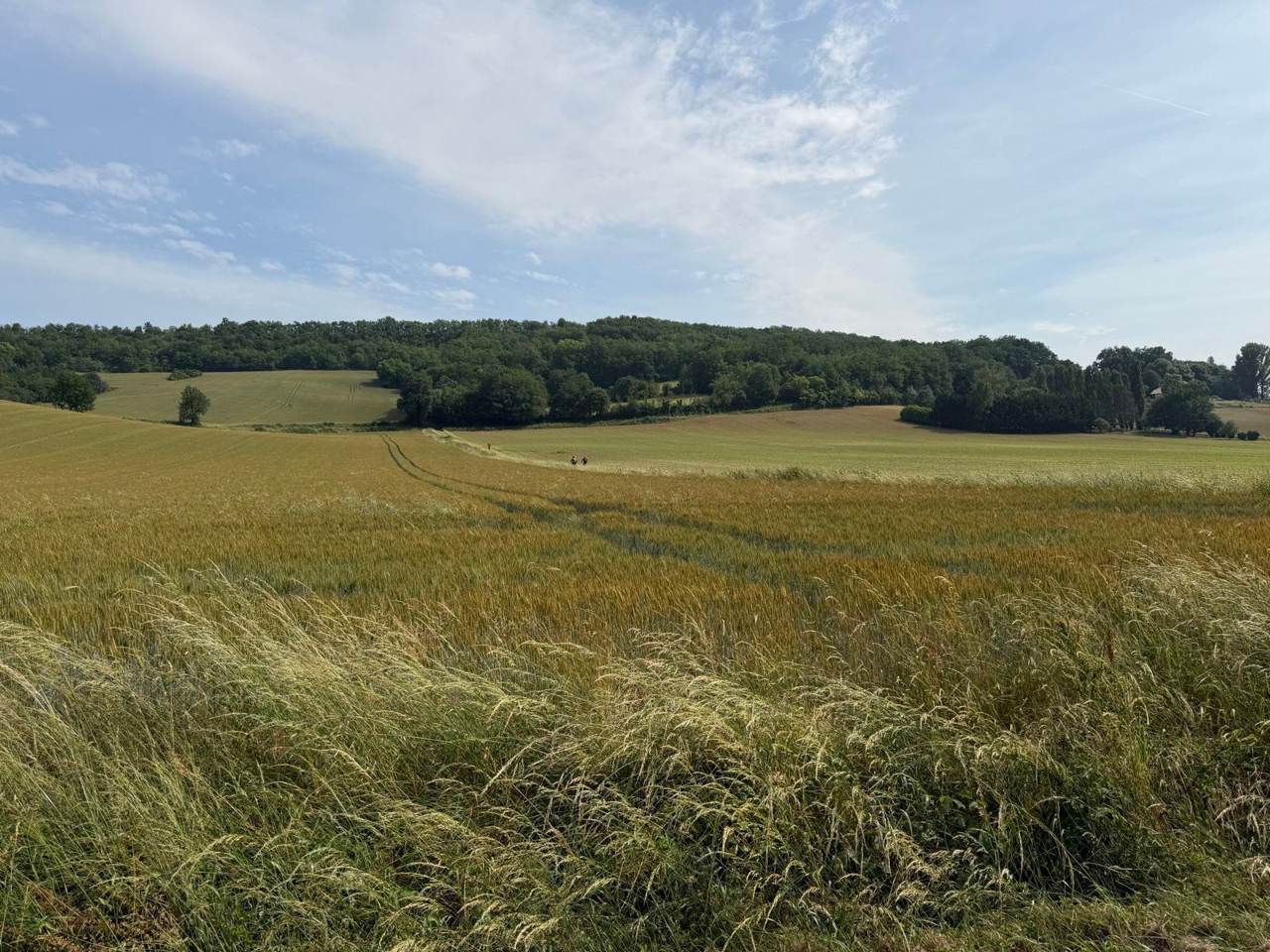
The Quercy Blanc is often compared to Tuscany: the same golden hills edged with oaks and vines, the same hilltop villages, the same warm evening light, fewer cypresses, more dovecotes.
Life here follows the rhythm of markets and seasons: near-empty roads, no crowds, producers at every bend, villages that are alive all year round, and Toulouse just over an hour away. A gentle way of life that draws travellers from all over Europe, and one we chose for ourselves.
The ideal place for a family to recharge, far from tourist pressure, in the heart of the South-West, and a base for exploring: the Massif Central 1 h by car, the Pyrenees 1 h 45, the ocean 2 h, the Mediterranean 3 h.
09 / 09
Tourist offices, institutions and transport.
Guided tours of the bastide, events, walking maps, tickets.
Town hall, events and village life.
Roads, greenways, sites and events in the département.
Departmental tourist board, including Domaine de Tayssou’s listing.
The Region, which supported the estate’s restoration, and its liO trains and coaches.
The regional tourist board and our listing.
Our official listing, 5 épis.
Regional buses serve Lauzerte from Cahors, Moissac and Castelsarrasin.
Train tickets; we can pick you up at the station on request.
Timetables and next departures of liO trains.
Another site to buy your tickets.
The town’s app: Lauzerte’s events, news and alerts on your phone.
Opening hours vary with the season: call ahead, or ask us, we are happy to book for you.